
Can Old Wiring Overheat? Signs and Safe Next Steps
A warm socket after charging a phone may be harmless, but a hot faceplate, a burning smell or a breaker that repeatedly trips is not something to ignore. Can old wiring overheat? Yes. Age alone does not automatically make an electrical installation dangerous, but older cables, connections and protective devices can be more vulnerable to heat when they are overloaded, damaged or no longer suited to how a property is used.
For homeowners, landlords and business owners, the practical question is not simply how old the wiring is. It is whether the installation remains safe, adequately protected and capable of supporting modern electrical demand. A professional inspection identifies the condition of the system and provides clear recommendations before a small defect becomes a serious fault.
Why old wiring can overheat
Electrical wiring produces a small amount of heat whenever current flows through it. A correctly designed, properly installed circuit dissipates that heat safely. Problems arise when resistance increases, the circuit carries more current than it was designed for, or a poor connection creates a localised hot spot.
Older properties may have circuits installed for a very different pattern of use. A house that once supplied lighting, a cooker and a few portable appliances may now support multiple chargers, computers, electric showers, kitchen appliances, heating controls, entertainment systems and home-working equipment. Commercial premises face the same issue when additional desks, servers, air conditioning, machinery or network equipment are added without reviewing the electrical capacity.
Older cable insulation can become brittle over time, particularly where it has been exposed to heat, sunlight, damp, movement or previous building work. Damaged insulation does not always cause overheating by itself, but it can allow faults to develop. Loose terminals are another common cause. Even a slightly loose connection at a socket, switch, consumer unit or junction can create resistance, and resistance generates heat at that point.
The type of wiring matters too. Some older installations may use materials or cable types that need careful assessment rather than assumptions. A qualified electrician can identify what is present, assess its condition and advise whether targeted repairs, an upgrade or a full rewire is the right response.
Signs old wiring may be overheating
Heat damage is not always visible at the cable itself, as much of it is concealed within walls, ceilings and floor voids. The signs often appear at accessories and points of use instead.
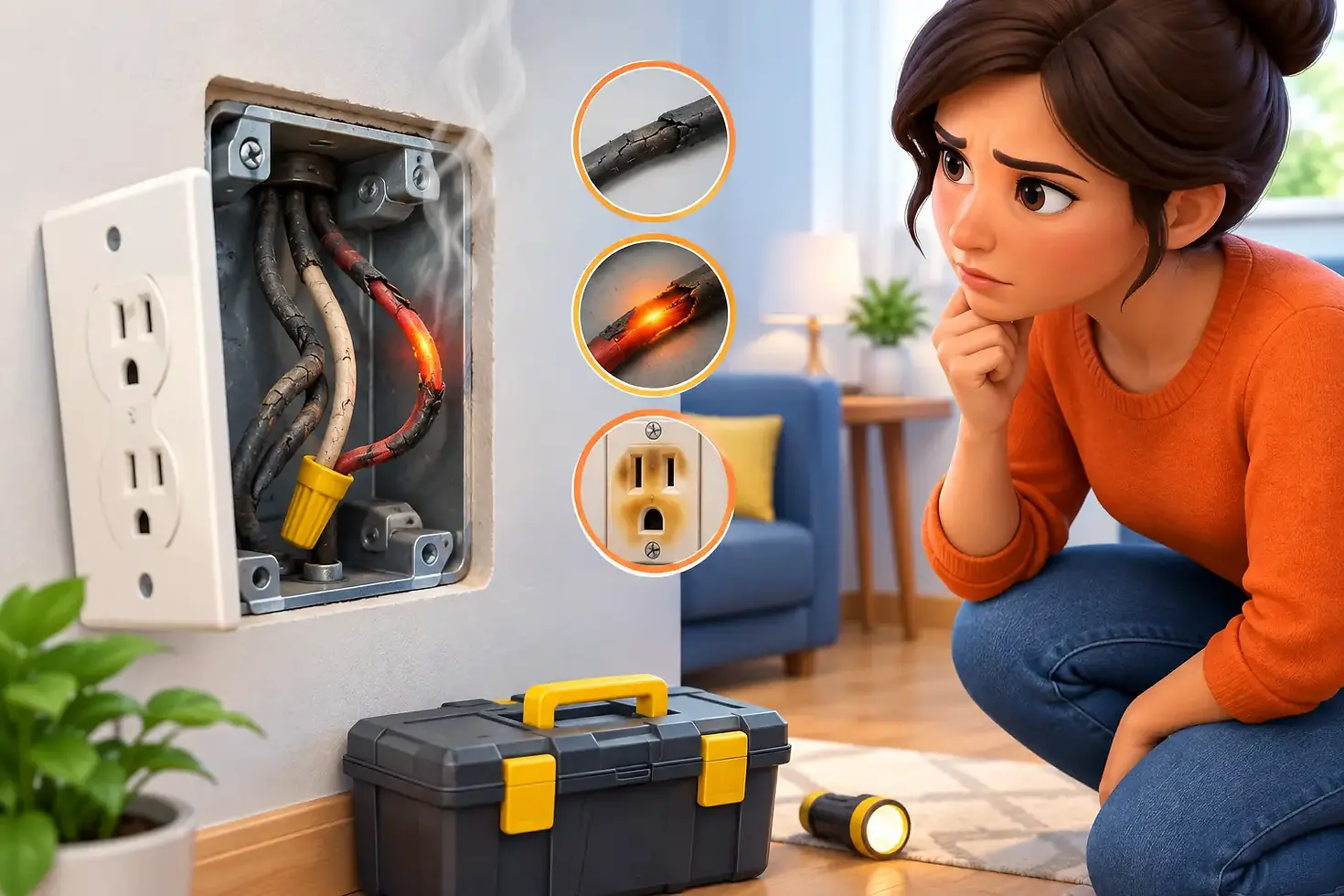
A socket or switch that feels unusually warm, discoloured faceplates, scorch marks, buzzing, crackling, a persistent burning or fish-like smell, or lights that flicker when appliances are used all warrant investigation. Repeatedly tripping circuit breakers or blown fuses should also be treated as a fault indicator, not an inconvenience to work around.
In a commercial setting, warning signs may be less obvious. Staff may report chargers or extension leads becoming hot, equipment may restart unexpectedly, or circuits may trip when demand rises during the working day. An overloaded extension lead beneath a desk is a visible concern, but the underlying circuit and its connections also need to be checked.
If there is smoke, sparking, a strong burning smell or visible scorching, switch off the power at the consumer unit only if it is safe to do so. Do not touch damaged equipment or attempt a repair. Contact a qualified electrician promptly. In an immediate emergency, follow the appropriate emergency procedures and call the emergency services.
Why a circuit breaker may not prevent every hot connection
Modern protective devices are designed to disconnect a circuit when they detect overloads or certain faults. They are essential, but they do not remove every risk. A loose terminal can become very hot while the overall current remains below the breaker’s trip threshold. Likewise, replacing a protective device with one of a higher rating to stop nuisance tripping can leave cables insufficiently protected.
This is why testing and inspection matter. The electrician is not only checking whether power is available. They are checking whether the circuit is properly protected, connections are secure, earthing and bonding arrangements are sound, and the installation meets the required standard for its condition and intended use.
Common causes in homes and business premises
Overloading is one cause, but it is rarely the full story. The most common issues tend to be a combination of ageing infrastructure, alterations and increased demand.
Poor-quality alterations can introduce hidden problems. A new socket may have been added to an already heavily loaded circuit, cables may have been damaged during drilling, or inaccessible junctions may have been left in unsuitable locations. DIY work and unverified historic alterations deserve particular attention in older properties.
Consumer units can also reveal the age and development of an installation. Older fuse boards may not provide the same level of residual current device protection expected in many modern domestic and commercial arrangements. That does not mean every older board requires immediate replacement, but it should be assessed in the context of the installation as a whole.
Landlords should be especially careful where a property has changed occupancy, been converted, or has appliances supplied for tenants. Regular electrical safety checks, accurate reporting and remedial work where required help meet legal duties and provide a safer environment for occupants.
When an EICR is the right next step
An Electrical Installation Condition Report, commonly called an EICR, is the sensible starting point when you are concerned about the safety or condition of fixed wiring. It is also appropriate before buying an older property, after significant alterations, when a business expands its electrical load, or when a landlord needs evidence of electrical safety checks.
During an EICR, a qualified electrician carries out visual checks and electrical testing on the fixed installation. The report identifies observed damage, defects, non-compliance and areas requiring further investigation. Findings are coded by urgency, helping you understand what must be addressed immediately and what should be planned for.
An EICR is not a guarantee that every concealed cable is perfect, nor does it automatically mean a full rewire is needed. Its value is in giving you an evidence-based view of the installation. That allows decisions to be proportionate, whether the work involves tightening and replacing accessories, upgrading a consumer unit, adding circuits for new equipment, or planning a rewire.
Repair, upgrade or full rewire?
The right solution depends on the test results, the condition of the cable insulation, the quality of previous work and the demands placed on the building. A single overheating socket with sound wiring elsewhere may be resolved by correcting the connection and replacing damaged components. Repeated faults across old circuits are a different matter.
A partial upgrade can be effective where the existing installation is in good condition but no longer meets the needs of a kitchen extension, office fit-out or new network cabinet. Dedicated circuits for high-load equipment, correctly specified protective devices and suitable containment can improve both safety and future capacity.
A full rewire is usually considered when wiring is significantly deteriorated, the installation lacks adequate earthing, major refurbishment makes access practical, or repairs would become piecemeal and poor value. It is disruptive work, so it should be planned carefully around decoration, flooring, occupancy and business operations. The benefit is a properly designed installation that supports current demand and leaves scope for future electrical and data requirements.
Do not confuse data cabling with mains wiring
Modern buildings often contain both electrical cables and structured data cabling. They serve different purposes and need appropriate separation, routing and installation practices. Adding WiFi access points, Cat 6 or Cat 6a outlets, cameras or communication equipment can increase the need for power at workstations and cabinets, but low-voltage data cabling must not be treated as a substitute for safe electrical design.
Co-ordinating electrical and network work can reduce disruption and avoid poor routing decisions during a refurbishment. For businesses, it also helps protect uptime by ensuring communications equipment has appropriate power provision and a tidy, maintainable installation.
Practical steps while you arrange an inspection
Do not keep using an outlet that is hot, damaged or showing signs of arcing. Avoid daisy-chaining extension leads, remove unnecessary high-load appliances from affected circuits and never repeatedly reset a tripping breaker without finding the cause. Do not cover cables with rugs or run them where they can be crushed, and do not make temporary repairs with tape.
Keep a note of when faults occur, which appliances are in use and whether a particular circuit trips. This information can help an electrician diagnose intermittent issues efficiently. It is also useful to retain previous certificates, EICRs and records of alterations, particularly for rented and commercial properties.
OIT Limited can inspect, test and report on electrical installations, then carry out the appropriate remedial work with clear certification and practical advice. The aim is not to recommend more work than necessary, but to establish whether your wiring remains safe for the way the property is actually used.
If old wiring is giving you any warning signs, treat the concern as a reason to investigate rather than something to monitor indefinitely. A timely inspection gives you a clear basis for action and helps protect the people, property and equipment that rely on the installation every day.


Comments